
Lettuce in! Comedian Kerry Godliman and ITV visit Putting Down Roots

The actor, Kerry Godliman, got her hands dirty yesterday when she visited our Putting Down Roots garden in Cedar’s Road, Clapham along with an ITV London crew. Kerry, who is an avid gardener, met with our Horticulture Skills Manager, Matt Woodruff, who gave her a tour of the garden and talked about the aims of our Putting Down Roots project. Matt introduced her to some of the clients who are benefitting from the project including Lily, the ‘compost queen’, who harvested a great selection of fruit and vegetables for Kerry to take away as a memento of the day. Kerry spoke to ITV about her love of gardening and how it has helped her wellbeing, whilst Lily explained how Putting Down Roots has helped her to find her focus. The filming was packaged into a news piece, and was featured on ITV News London, across both the 6pm and 10pm news! Great awareness of the amazing work at Putting Down Roots, which you can view here. Putting Down Roots is a horticultural therapy and training project, using gardening as a way of helping client’s in their recovery. The programme teaches clients the practical skills needed to grow and maintain a wide selection of plants, including flowers, fruit and vegetables. Over the past 21 years, the programme has supported hundreds of people in their recovery from homelessness and supported them to build their confidence, learn new skills and provide a sense of routine. Kerry is a loyal supporter of our work and has helped to raise awareness of what we do. She has participated in our Take the Lead fundraising campaign, and last year she visited our award-winning Putting Down Roots garden at the Chelsea Flower Show.
LGBTQIA+ and Homelessness

At St Mungo’s, there are many reasons why promoting equality, diversity and inclusion is fundamentally important for us. The people we support are more likely to experience disadvantage and discrimination, including those who identify as LGBTQIA+. In this blog, we look at the link between LGBTQIA+ communities and homelessness, as well as how we support people. What is the link between LGBTQIA+ people and homelessness? Many LGBTQIA+ people still experience discrimination and bigotry and this can have an effect on home environments. This can result in them needing to leave home, sometimes without anywhere to go. As much as 24% of young people who are at risk of homelessness are LGBTQIA+ (Akt, 2015). Data from the charity Akt shows that many young LGBTQIA+ people experiencing homelessness aren’t aware of what services are available to support them, or are worried about experiencing discrimination in those services. Their 2021 report shows that 50% of young people fear that expressing their identity may end in being made to leave home. Before becoming homeless, 61% felt frightened or intimidated by family members. How does St Mungo’s help support LGBTQIA+ individuals? At St Mungo’s, we make sure our services are informed about LGBTQIA+ issues, and are welcoming to everyone regardless of sexual or gender identity. When referring people to our different kinds of accommodation, we assess whether that environment is right for them, including any support needs they might have, and what will make them feel most safe. Sometimes, single gender places are the best fit for the people we’re supporting, and in these cases we always make sure that people go to the accommodation that best fits their gender identity, unless they request otherwise. Our staff are trained on LGBTQIA+ issues, and we continually assess and consider the experience of our clients through feedback forms and services. How does St Mungo’s support and welcome LGBTQIA+ staff? We work with Stonewall UK and we are 14th on their Top Employers List. Stonewall has also awarded St Mungo’s a prestigious Gold Award, which celebrates organisations that go above and beyond to empower LGBTQIA+ staff members to be themselves at work. For the great inclusion work achieved by our LGBTQIA+ Network, St Mungo’s has also received a Highly Commended Network Group award.
First Response: a great place to start
Kouame is one of our First Response volunteers in Westminster. First Response teams receive alerts from the public about the locations where people are sleeping rough. The teams then provide extra information to outreach teams, confirming that people are still there and what kind of help they might need. Here, Kouame shares his experience of St Mungo’s, both as someone who was supported by us, and now as someone who volunteers with the First Response team. I started to volunteer with First Response in July 2022 and it’s been very good for me. I’ve been learning new things. I used to volunteer many years ago with a Church organisation in South London. Their way of doing it was a bit different to St Mungo’s, as people would come to them for support. I prefer going to people who are rough sleeping to offer support because sometimes it’s not easy for some people to go to particular places. I prefer the way that the St Mungo’s outreach and First Response team does it. I used to be homeless a few years ago and I was supported by St Mungo’s until last year when I moved into my own flat. I was still living in St Mungo’s accommodation when I applied to volunteer with First Response. St Mungo’s was everything when I was homeless, they helped me with every aspect of my life and I said to myself that I would like to give back. When I was in their accommodation, St Mungo’s helped me with absolutely everything. It was like my home. It was so welcoming, St Mungo’s was my family and it still is. Every single thing was done by the team, from lawyers to accommodation to food, clothing, everything. On a typical day I go to the Westminster Outreach Office to start my shift. The team are very welcoming and tell you to feel free to get yourself a drink and relax. If the other volunteer is already there, you take the time to introduce yourself and share the experiences that we already have. Then we look at the referrals list and try to arrange them in way that would be easiest for us to go through and look for people. We can then send some feedback to the Outreach Team by text messages or sometimes by calling them. Very often we get the right guidance of what to do and I find it very helpful to speak to the Outreach Team in this way. For instance, we would tell the Outreach Team that it would be fine to call this client because we believe they need support. If you want to be a good volunteer, you need to be good at listening to people and not assuming anything. As humans we assume a lot of things but there are so many different situations that bring people into homelessness and I have seen people from all different backgrounds. But the average person when seeing people who are sleeping rough might put everybody in the same boat like, “oh they’re just lazy and don’t want to work” and pass them by. So they need people like the Outreach Team to try to talk to them. I believe that First Response is a very interesting volunteering experience for anyone aspiring to be a part of the Outreach Team or who wants to work with people experiencing homelessness in the future. It’s something that I would recommend to anyone who is willing to join as a volunteer, First Response is a great place to start.
Ioan’s Story

Edward, one of our Roma Outreach Mediators, shares his story of meeting Ioan, and supporting him out of homelessness. In any story, if it’s a good story, there is that which is seen and that which is hidden. This is especially true in stories about us, the Roma community. There are the actions we see, a contest of ignorance and prejudice, followed by perseverance and commitment. Meet Ioan, a 49-year-old Romanian gentleman who has slept outside on a mattress for the last ten years until 2022. Ioan’s story is a heartbreaking reminder of the struggles faced by those who are experiencing homelessness and dealing with health issues. Ioan found himself in hospital not once, not twice, but three times in one year due to heart failure. His medical situation is complicated, with multiple conditions that require ongoing treatment and monitoring. I came across Ioan by happenstance as I was about to finish my shift and saw him waiting patiently for an appointment with his local doctor. Ioan had a friendly voice that prompted me to ask if he’d like me to accompany him. Ioan agreed saying it would help him greatly. It was then when I learned about his medical situation. It saddened me. The following days I dedicated most of my time in bringing this gentleman to a place of safety, and ultimately to ending his homelessness. The bureaucratic barriers that Ioan faces, including his lack of access to public funds due to his immigration status and multiple rejections for Universal Credit, further compound his difficulties. It is a frustrating and often demoralising experience to navigate through a complex system that seems designed to exclude or ignore those who are most in need of help. I began investigating about his immigration status, benefits, exploring housing options, medical situation and to learn how to address it better. It was a mammoth piece of work endorsed by the partner organisation which I was working in conjunction with. Ioan struggled with alcohol dependency. We tried to help him by engaging him with motivational talk; linking him with wellbeing services, medical professionals, and approaching his family and friends for assistance. Everyone was responsive, but nothing appeared to work. Ioan was placed in a temporary accommodation because he was due for his third heart surgery, so we had to make sure he was rested and hoped he wouldn’t drink. He didn’t; he was sober as a judge all along. It was at that point that I realised there is light at the end of the tunnel. The surgery did not go as planned, it was postponed, and when Ioan left the accommodation, he collapsed on the street and awoke in the hospital. I gathered as much medical evidence as I could, researched as best I could, and requested a Romanian translator to translate. Backed up with information, Ioan’s support worker who he’d worked with previously, a Romanian translator and Ioan himself, Ioan began a care assessment. The result came after a week – it was a pass. The dynamic shifted at that point in Ioan’s favour and he was placed in accommodation. The following days all actions, medical appointments followed their typical rhythms. Ioan got registered with the local Wellbeing Service which he is engaging very well with to this day. And there’s more: Ioan’s application for Personal Independent Payment was also approved, meaning he now has a monthly income. Ioan remains resilient and determined to find a way forward. His experiences serve as a powerful reminder of the need for compassion and understanding in our society, particularly towards those who are marginalised and facing multiple challenges. It is important to remember that behind every person experiencing homelessness, there is a story and a human being deserving of dignity, respect, and support.
Volunteering to Help Women Recover from Homelessness

Grace is a Gardening Volunteer at one of our Westminster Women’s services. We asked what International Women’s Day means to her, and how her volunteering has helped support women who’ve experienced homelessness. I’m a Gardening Volunteer during the spring and summer at one of the Westminster Women’s Wellbeing accommodation services. Gardening has many broad and diverse benefits which include improved mental and physical health, less social isolation and a sense of fulfilment when a plant is grown. The women I support found great satisfaction in the success of our flowers and one of them created a healthy routine which involved getting up in the morning to tend to the plants whilst getting some fresh air. I believe that all of these benefits, whilst making a positive improvement to their space, support women who are recovering from a period of homelessness. In a previous volunteering role at StreetLink, I spoke to many women who were experiencing homelessness. They didn’t feel safe bedding down to sleep rough at night due to the increased risk of abuse or violence. They were more likely to try and find somewhere to sofa surf or keep moving throughout the night which meant that they couldn’t access as many services. There are many amazing women’s specialist support services and specific times at day centres for women’s only spaces, but I don’t believe that this is enough. Women’s services need to be safe for women to attend and get support, especially if they are fleeing from dangerous situations. This means that women’s services need to be consulted on by women with lived experience, integrated into homelessness services and they need to be taken seriously. In my opinion, in order to prevent women’s homelessness, there needs to be more funding available for women’s specialist services. This would include providing safe pathways for survivors of domestic abuse to flee from perpetrators, long term accommodation options for asylum seekers as well as specialist support for LGBTQIA+ women. International Women’s Day means celebrating all women, especially those from marginalised communities, their achievements and using the space as a call-to-action to make the world a safer and more prosperous world. If you’d like to make a difference and volunteer, you can find more out here.
How Leigh Creates an Inclusive Workplace for their LGBTQIA+ Colleagues
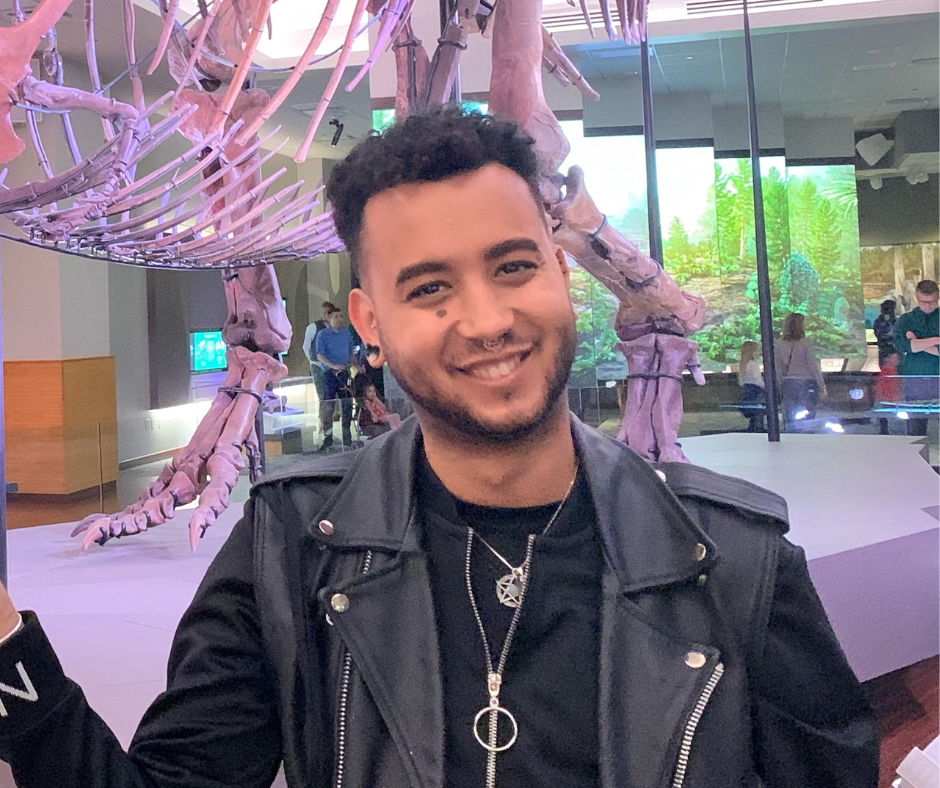
Leigh is a Service Manager in Hither Green. As part of LGBTQIA+ History Month, we asked them about what being part of the LGBTQIA+ community whilst working with people who experience homelessness means to them. I went to school during Section 28 , so my formative years growing up were in an era when there was no positive representation for people like me. I am proud of my queer identity, and it influences every corner of my life. So for me it’s important to show that positive relationship I have with my identity in the workplace for queer staff and residents. I have had really great conversations with our residents about my non-binary gender identity, smashing the stigma about people who’ve experienced homelessness and how people assume they might respond to difference. Similarly, it feels so important to be a positive representation for young queer staff who hopefully benefit from my vision of a bold and inclusive workplace. I have always been keen to maintain a client facing role because the most rewarding part of the work for me is the relationship we build with our residents. As someone who benefited from St Mungo’s services almost 10 years ago, I understand the importance of relationship building and the importance that plays in helping our clients thrive. My first homelessness job was actually with St Mungo’s in 2016, I was a support navigator for Waltham Forest Single Homelessness Advice and Support Service. I worked assessing and supporting the single homeless population in the borough. I absolutely loved getting to know people and how fast paced the work with people who were sleeping rough was. Before coming to Spring Gardens I had taken a sabbatical. Like many others in the sector, I had found working though the pandemic difficult and prioritised my own wellbeing, so I was refreshed in my desire to help others. My previous employment was as London Services Manager for AKT an LGBTQIA+ youth homelessness charity. I managed services ranging from an advice and support service to a network of LGBTQIA+ supported lodging placements. My role predominately involves overseeing a team of four managers who manage more than twenty staff across the two sites. The great thing about the project is no one day is ever the same and there is always a challenge to find a solution for. I work really hard to set a culture that is client focused, inclusive and bold. We can’t end homelessness until we tackle the structural barriers in this country and see major changes to the way we view social needs. For me, that means decriminalising drugs, prison reform, a new asylum system, defunding the police and investing in specialist social teams and services. Most importantly the government needs to invest and build more affordable homes and supporting people into them and to sustain them.
National Apprenticeship Week
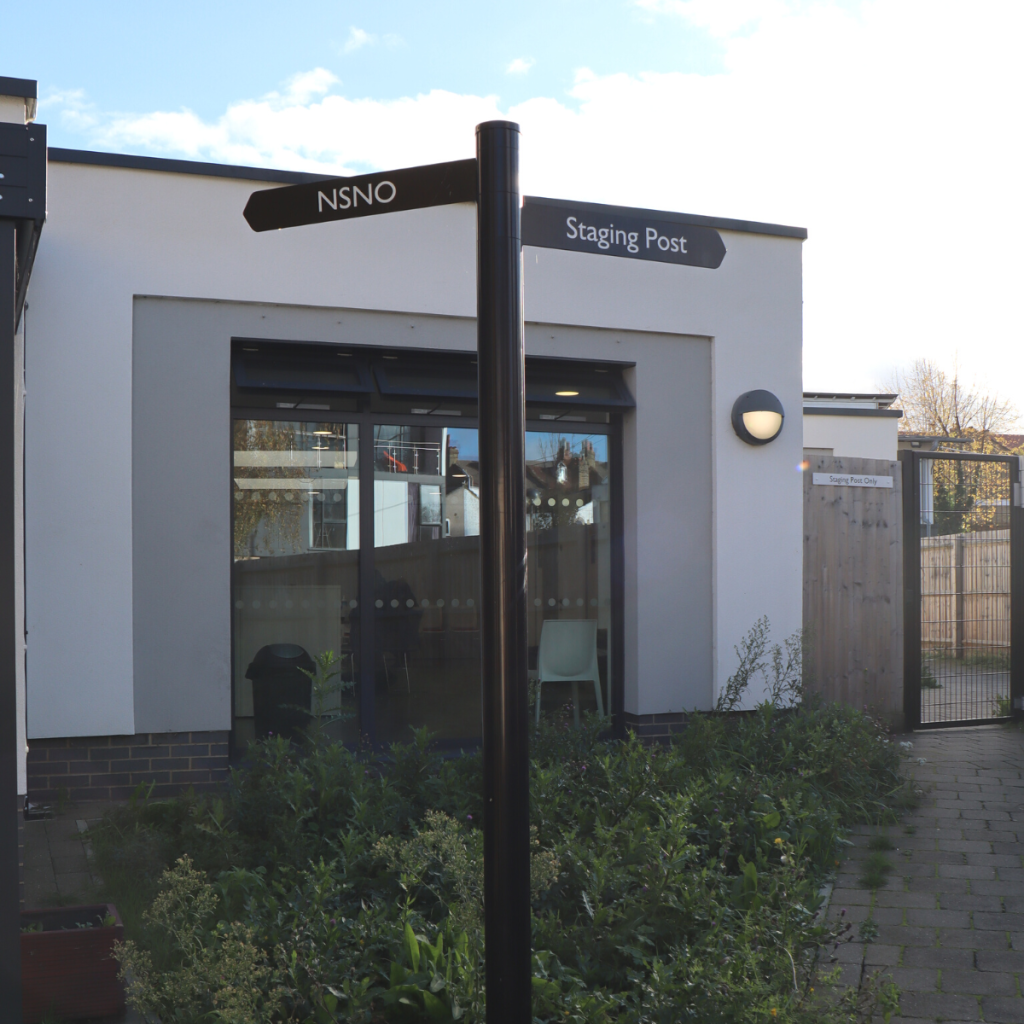
Nine years ago Dan found himself experiencing homelessness after his Landlord sold the property he was living in. He struggled to find a new tenancy that would accept him, and his beloved dog, Moby. After sleeping rough in Brighton, he and Moby were supported into safe accommodation by St Mungo’s. Today, he works as an Apprentice Assessment and Reconnection Worker in a No Second Night Out (NSNO) service in London. We asked him about his experiences of being an apprentice at St Mungo’s: My average day as an Apprentice Assessment and Reconnection Worker is hectic. Pretty much anything that can happen, will happen , and the best laid plans sometimes have to be shelved in favour of taking a more dynamic approach. My day starts with a team handover meeting to discuss any issues that may have arisen overnight. After this, I liaise with the Duty Team for that day and we discuss anything that needs to be achieved, any clients that need special attention and which admin tasks can be covered. After this, I like to check my emails for any client referral updates and any specific tasks that have been allocated to me. Then I will turn my attention to casework, the clients that I need to see or support and of course, any referrals that need chasing up. It’s easy to get caught up with outstanding tasks in any given day, but I always try to make sure that the people we support at NSNO are at the forefront of how I organise my time and prioritise tasks. My previous career was in the hospitality industry, so undertaking an apprenticeship within St Mungo’s has helped me to develop my transferable skills in terms of working within the adult social care sector. It’s also given me the knowledge that I needed so that I have a strong foundation to build on for the future. The apprenticeship scheme has introduced subject areas that I didn’t have an understanding of previously, such as how our services are commissioned, and the effect that personalisation within care and support has had on how we deliver those services. Learning about these different areas as part of the Apprenticeship Programme has also shown me how my career could develop in the future. Overall, undertaking an apprenticeship has given me the space to learn and access to new knowledge that will make my change in career a sustainable one. My time so far at St Mungo’s has been everything I thought it would be, but one moment stands out particularly. Someone told me when I started at NSNO that I would never forget the first person that I had supported and that was true. This particular person had extremely poor mental health and required some particular support while at NSNO to manage this. They also found the environment challenging to be in. When they told me that their referral had come through and they had viewed where they would be moving, their happiness was obvious and I was so happy for them. It really is something that will never leave me and why I wanted to do this work. I would tell anyone that was thinking about doing an apprenticeship that it is more challenging than you may expect, but that it’s definitely worth the effort you put in! I have a degree in History so I thought that the written work would be easier for me but it takes lots of time to produce work of the quality to meet merit or distinction standard. You also have to be prepared to keep the boundary of taking the twenty percent protected time for the apprenticeship, because if you don’t, it’s easy to get behind! However, if you want a strong foundation on which to base your career, then it is well worth the extra effort and after all, it’s only going to be 15 months!
SWEP: what it is and why it is important
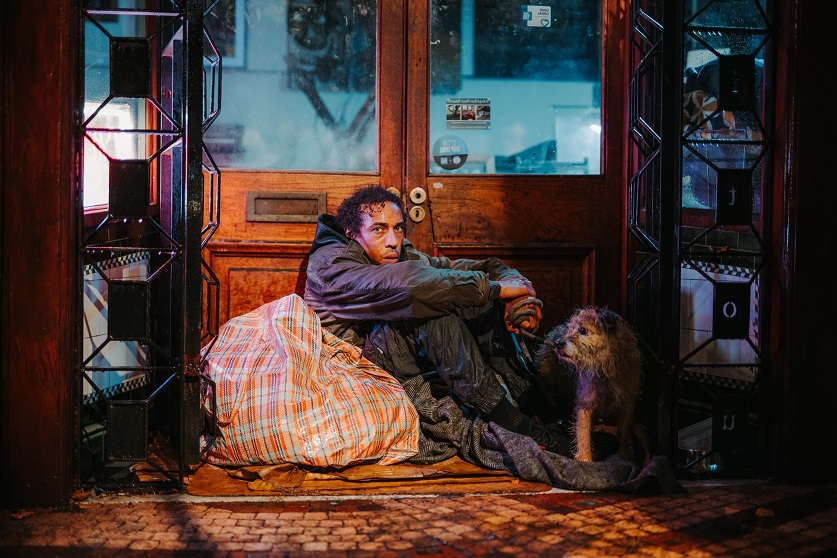
SWEP stands for Severe Weather Emergency Protocol. It is a crisis response process that helps to increase support for people experiencing homelessness. This most often happens when cold weather warnings are issued. SWEP is declared by local government when the temperature in the region falls below zero degrees celcius for three or more consecutive nights. But there are some variations to this criteria. The ‘feels like’ temperature is also considered, as well as additional factors like wind, rain and snow, which could pose health risks in temperatures exceeding zero. Cold temperatures can be fatal for anyone sleeping rough, and people are especially at risk in the winter months. SWEP is a local humanitarian response, in which the focus is getting people sleeping rough off the streets, eliminating fatalities and reducing strain on emergency services. Local councils will increase outreach shifts and open up more emergency accommodation in order to achieve this. How St Mungo’s helps during SWEP St Mungo’s outreach workers have been out every night this winter to make it someone’s last night on the streets. When SWEP is announced, we increase these outreach shifts and target areas with a high density of rough sleeping. Getting people into accommodation is critical during winter, but ongoing support is also key. Our outreach teams work directly on the streets, helping people experiencing homelessness access food and shelter. We also work closely with our clients following this, offering advice and support to help them rebuild their lives. Stories like Martin’s show how essential this support is to help someone turn their life around. How you can help If you see someone sleeping rough, you can contact StreetLink online or by calling 0300 500 0914. They will then forward the referral onto our outreach teams. Please note that StreetLink is not an emergency service. If you are concerned about someone’s health, please dial 999. St Mungo’s are always looking for volunteers to support our life-saving work. If you can spare some time to help, take a look at our current volunteering opportunities. The winter months see the highest demand for our services, and our work cannot happen without the generosity of our supporters. If you can, please make a donation, which could bring someone out of the cold and off the streets for good.
How St Mungo’s supports women
16 Days of Activism against Gender-Based Violence is an annual United Nations campaign that runs from 25 November to 10 December, and this year’s theme is UNITE! Activism to end violence against women and girls. In this blog, we look at the services provided by St Mungo’s to support women experiencing homelessness and hear from Michelle Chapman, one of our Domestic Abuse Navigators, about her work. The experience of homelessness can vary greatly between men and women. The heightened risk of domestic abuse and sexual violence against women can act as both a potential cause and effect of homelessness, and from the women we support at St Mungo’s, we know that safety is often their most crucial concern. As a survivor of abuse herself, Michelle understands the impact that this can have: “Being a survivor and working with survivors to me is the ultimate privilege. I see the strength that they have to survive on the streets. They have survived before I knew them and always managed, no matter how hard it is. But I also see a fragility in them that’s hidden behind those harsh exteriors and the ravages of a life that some of us can only imagine. The fragility extends to everyone who is in a situation that is beyond their control, whether it is because of their mental health or just the trials of life.” At St Mungo’s we provide women-only services and spaces to prevent women being re-traumatised by accessing support with male clients, particularly if they have experienced violence or abuse from a male perpetrator. We believe that women in all areas should have the choice to access mixed or women-only services and spaces based on their safety and preference. Health problems are also a major issue, and the average age of death for a woman sleeping rough is just 43. Both women and men alike who are experiencing homelessness are at high risk of physical health problems and are often exposed to further harm from smoking, substance use, poor diet and dangerous living conditions. “Some of the girls I support may have addictions and seek to get ‘their fix’ early in the day. Drugs briefly remove them from the harsh realities of life to that comfortable place they call normality.” Women who experiencing homelessness also have the same physical health concerns as women in the general population, but these are less commonly considered within homelessness services. For example, it is essential that women experiencing homelessness still have access to early detection and screening services, including cervical smear testing and breast cancer screening, as well as age-related health checks. At St Mungo’s, our colleagues never give up on the people we support. Frontline workers like Michelle spend a great deal of time building trust and working with women to create practical and personal strategies, helping them to move away from the streets safely, and working with them alongside service-based staff throughout the process to ensure a real recovery from homelessness. “Today’s a good day and one of the women who doesn’t normally engage with me is eager to talk. Normally I am chasing for this but I have found that leaving a message on a note card is the magic key to start a conversation. It’s brief, but nonetheless we chatted. The foundations for future meetings are there and this makes me smile. I wonder how the world sees these girls. The judgements are always hiding under the surface and I wonder if they knew their stories if they would they feel any different. The nature of the job means that frustrations constantly play with my emotions, as no matter what we do it never feels like it is enough. But the reality is that we are all doing something and we will continue to support these women, no matter what.” If you’re concerned about someone you’ve seen sleeping rough, please contact StreetLink to refer an individual to local homelessness support services.
Celebrating our partnership with Fieldfisher

Since 2019, law firm Fieldfisher has supported St Mungo’s to tackle challenges facing people experiencing homelessness. In this blog, we take a look back at some key moments in the partnership and celebrate all we have achieved by working together to end homelessness. From the beginning of our three year partnership, Fieldfisher employees were keen to leverage their skills to help St Mungo’s clients in their recovery from homelessness. Digital exclusion disproportionately impacts people who have experience of homelessness, and this digital divide was made even greater when many things moved online during the pandemic. Fieldfisher recognised this and helped our clients to learn basic IT skills, by running IT courses for clients at St Mungo’s Recovery College. These courses aimed to teach essential digital skills in a safe and supportive environment, as well as offering more advanced skills such as web development. More recently, Fieldfisher collaborated with Baker McKenzie to provide pro bono support to St Mungo’s. Both firms worked closely with teams at St Mungo’s to identify areas of the law that homelessness specialists found unclear and difficult to navigate. The law firms then designed, wrote and built an online legal toolkit to enable staff to gain a better understanding of laws that relate to our work and clients. The toolkit itself is not exhaustive, nor a supplement for independent legal advice, but instead serves as a solid and accessible starting point to support staff in their roles and to help clients realise their rights. The toolkit, which has been two years in the making, launched in September and will continue to be updated in future outside as part of both law firms pro-bono commitments. Reflecting on the partnership over the past three years, Fieldfisher’s Corporate Responsibility Manager, Millie Hawes said: “Global crises of recent years have disproportionately affected people who are homeless. We have often felt powerless over how to help, but working with St Mungo’s has allowed us to donate our skills and time, as well as our money. The digital inclusion workshops paved the way for non-legal pro bono programmes, and showed how law firms can partner with other organisations to make the law, and justice, more accessible.” Jay Hunt, Head of Partnerships at St Mungo’s added: “Our partnership with Fieldfisher is a shining example of the type of strategic relationships we want to build with our partners. Every step of the way, Fieldfisher considered how they could add value to our work by using their skills and resources as a business to address specific issues facing our clients and staff. On top of this, despite several lockdowns throughout the duration of the partnership, their drive and enthusiasm for our work was unwavering, resulting in them raising over £100,000 for St Mungo’s.” We work with companies from a huge range of sectors to support people who’ve experienced homelessness or rough sleeping. Together we can end homelessness. Find out here how your organisation can get involved and help.


